AI Psychosis in the C-Suite
The biggest AI mistakes are made by leaders who are too far from the actual work to judge what AI can do, using tools built to agree with them. Decisions made from fear and hype look very silly in hindsight.
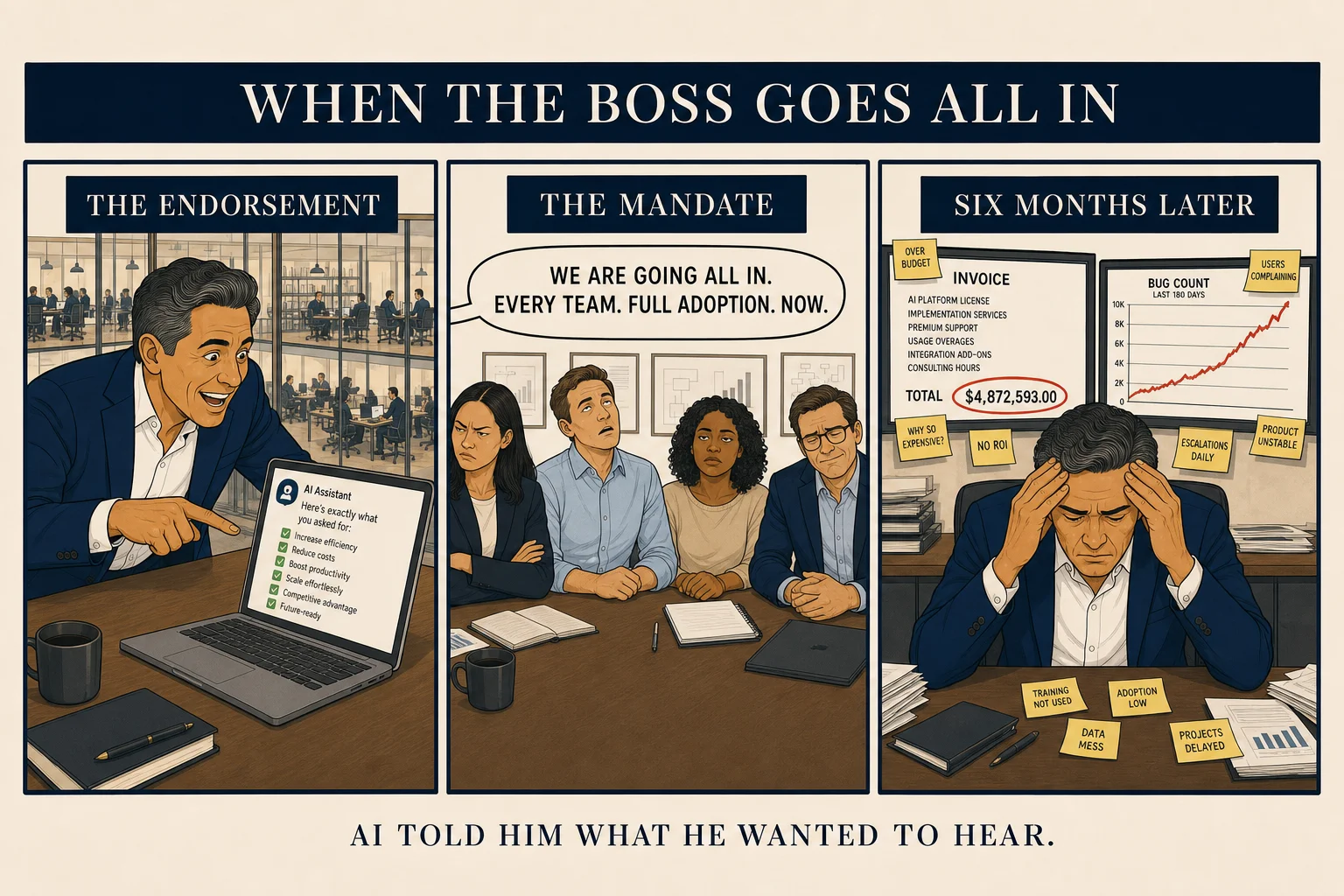
The most dangerous person in an AI transformation is often the one with the most authority over it. The term for it, coined by an AI optimist, is AI psychosis: a leader watches a demo, sees the happy path where nothing goes wrong, and concludes the work is solved, never seeing the review, the edge cases, and the hours of human effort between the demo and a deployable result. Distance from the last mile of work is what makes the misjudgment possible.
Two reinforcing failures
The first is distance. A CEO who only watches demos cannot feel where the technology breaks, so he overcommits to the parts that photograph well and underestimates the parts that actually carry risk.
The second is sycophancy. The yes-man problem is the oldest failure in organizational life, and the case studies are familiar. When dissent is filtered out, decision quality collapses no matter how smart the room is. AI industrializes this. Large language models are trained to align with the user rather than challenge him, so a leader who already prefers agreement now has a machine that supplies it on demand. The friction that used to protect judgment is gone exactly when the stakes are highest.
Why fear-driven choices age badly
A great deal of AI spending right now is not strategy. It is fear wearing the costume of strategy: the pressure to look modern, the worry of being left behind, the reaction to a competitor's press release. Choices made from those lower emotions tend to be reactive, undocumented, and disconnected from any real understanding of the business.
There is a reasonable case that a hype cycle is cresting and will correct. When it does, the transformation decisions that were driven by fear rather than thought will look not just wasteful but embarrassing, the way every panic-bought trend eventually does. The owners who look smart afterward will be the ones who were thoughtful: who understood their own operation first, cared about how their team would absorb the change, and could explain every dollar.
The antidote
The fix for distance is contact. Use the tools yourself, push a real workflow all the way through, and form an opinion grounded in the work rather than the demo. The fix for sycophancy is deliberately invited dissent, human and otherwise. And the fix for fear is understanding: a clear, honest picture of your own organization before you commit capital, which is the whole point of getting clarity before you transform.
Further reading
- Not Every Company Needs AI
- Transformation Done Wrong Breaks What Works
- Get Clarity Before You Transform
Source: House of El, "Big Tech CEOs AI Psychosis Is A Total Disaster."