Own the Substrate
A business that runs on a closed API is borrowing capability that can change without notice. Owning the substrate means controlling the weights, prompts, version, and runtime your operation actually depends on.
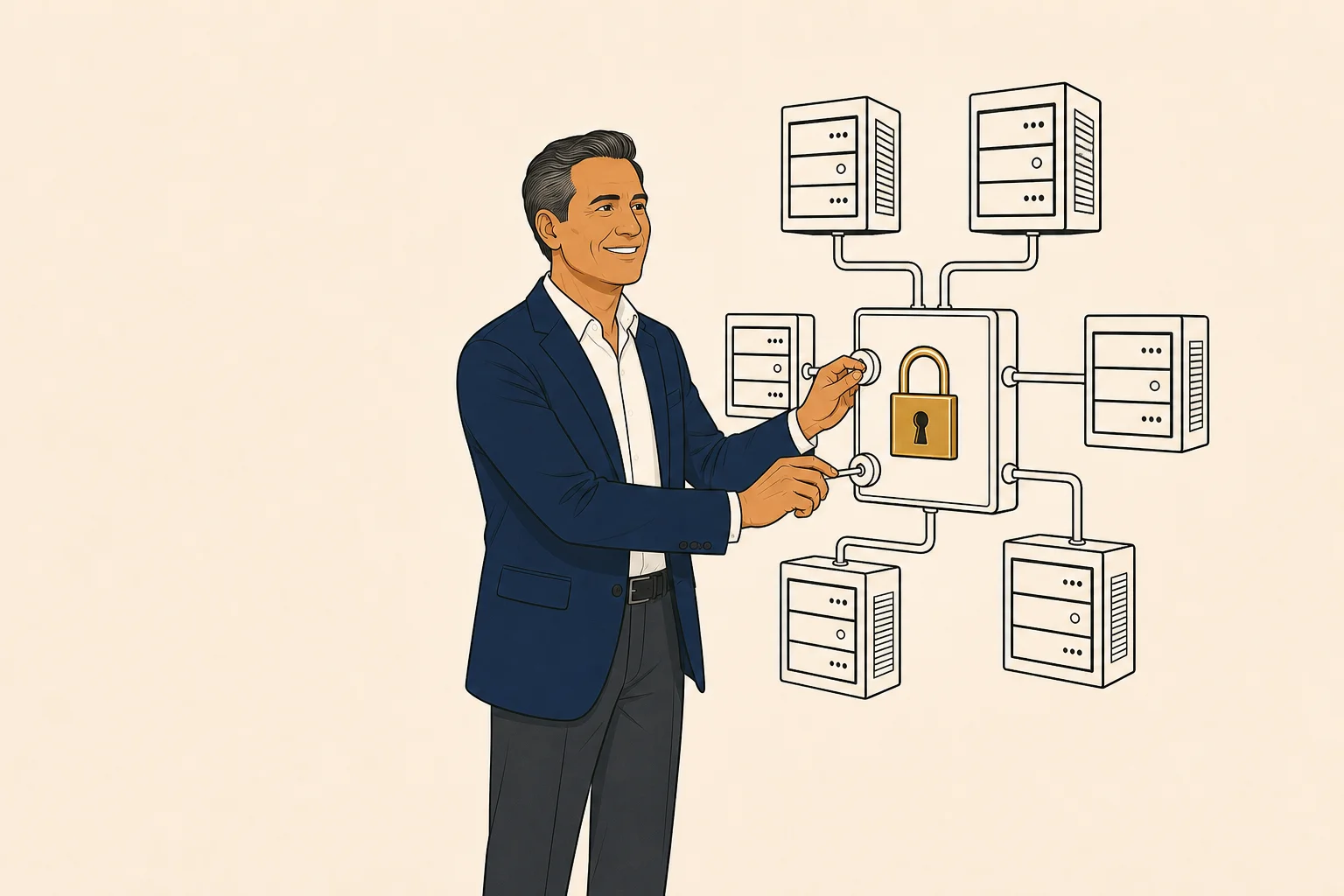
As AI moves from a novelty into the machinery a company runs on, a quiet question decides how durable that machinery is: do you control the thing your business now depends on, or are you renting it from someone who can change it on their schedule. The substrate is the full reasoning surface underneath your AI: the model weights, the system prompts, the version, the tokenizer, the runtime, and the hardware. Owning it is the difference between an operation you can stand behind and one that can shift under your feet overnight.
The illusion of the pinned version
Most operators believe they have control because they pinned a model version in an API call. They have not. The vendor controls everything around that version: the system prompts, the safety rules, the firmware and routing, all of which can change every day or two while the version string stays the same. The model is nominally identical, your pipeline breaks, and because what changed was never in your control, you cannot debug it. A pinned version on a borrowed substrate is a comforting label on a moving target.
What ownership actually buys
The case for owning the substrate is not ideology or vendor independence for its own sake. It is operational: debuggability and reproducibility. When you own the reasoning surface you can understand what changed and why, reproduce a decision your business made last quarter when a regulator or a buyer asks, and swap one model generation for the next without rewriting your applications. Those are the properties that let an operation be trusted, audited, and transferred.
The cost story has reversed
The old objection was that owning your own models is expensive. That has flipped. Smaller, self-hosted models now match or beat larger hosted ones on many specific tasks at a fraction of the cost, and as token pricing tightens, owned-weight pipelines get cheaper than hosted inference at scale rather than more expensive. The premium is increasingly on the borrowed side.
What good looks like
A few moves separate real control from the illusion of it. Run your regulated and hard-to-debug workloads on owned weights. Version your system prompts alongside your application code, because a prompt is part of the program. Pin the complete substrate rather than just the model name, because partial pinning leaks the same vulnerabilities you were trying to close. The test of whether you have it: you can name every model your business uses, reproduce last quarter's outputs, survive a fifty-percent price increase from any single vendor, and move to a new model generation within a sprint.
The deeper principle is simple. Operating on a borrowed substrate means operating on borrowed strategy. The point is not independence as a trophy, it is optionality and resilience: the ability to keep running, and keep improving, no matter what someone else changes.
Further reading
Source: Built for Exit, "Supersuit Up or Get Left Behind."